
Riots on Ocean Island (Banaba), 1925
Updated: Mar 1
A Forgotten Part of Ocean Island History, as Told by Arthur Grimble (1) in Return to the Islands and Preserved in the Photographs of John F. Williams.
In 1925, the fragile peace on Ocean Island (Banaba) collapsed into violent unrest. What followed was not a spontaneous disturbance but the eruption of long-standing tensions between Chinese and Gilbertese indentured labourers working the phosphate fields for the British Phosphate Commissioners.

This episode was later recounted by Arthur Grimble in his book, Return to the Islands. Yet alongside his written account exists another record — a visual one. The author's great-grandfather, John F. Williams, lived on Banaba from 1901 to 1931. A keen photographer, he documented life on the island, including the dramatic events of the 1925 riots. Thanks to modern digital colourisation, these historic images have been brought to life, offering a remarkable window into a world otherwise lost to time.

Background: Banaba and Its Phosphate History
Banaba, also known as Ocean Island, is a small, remote island in the central Pacific, part of what is now Kiribati. Despite its tiny land area, it became strategically and economically significant in the late 19th and early 20th centuries due to its rich phosphate deposits. The British Phosphate Commissioners(2) began large-scale mining on the island, exporting phosphate primarily to Australia and New Zealand to fertilise farmland.
Life on Banaba was shaped by the demands of phosphate extraction. Indigenous Banabans, alongside indentured labourers from the Gilbert Islands, Ellice Islands, Japan and China, were brought to the island to work under strict and often unequal conditions. Housing, pay, and privileges were segregated along ethnic lines.

This multi-ethnic labour system created a fragile social structure. Tensions between the Chinese and Gilbertese indentured labourers simmered for years, driven by differences in treatment, resentment of authority, and the Gilbertese’s role as the island’s constabulary. These tensions would eventually erupt in the violent riots of 1925.
Divided Community
By the 1920s, Ocean Island was one of the Pacific’s most important phosphate-producing outposts, supplying Australia and New Zealand. Beneath the machinery and conveyor belts, life was sharply divided. Chinese and Gilbertese indentured labourers were segregated, paid differently, and treated unequally. European overseers managed operations from afar, limiting interaction between groups. Resentment simmered, and minor disputes flared frequently.
The Gilbertese labourers, in addition to their work duties, also served as the island’s constabulary. Their dual role as fellow workers and enforcers of colonial authority complicated relations and added fuel to the simmering tensions between the two groups.
The Escalation into Violence
By November 1925, these simmering tensions erupted into violent riots, as Arthur Grimble recounts in Return to the Islands. Chinese indentured labourers armed themselves, reportedly with firearms and improvised explosives, and engaged in fierce clashes with Gilbertese labourers on the topside of the island, the plateau where phosphate was mined. The violence escalated to a point that the small colonial police force could not contain, which is why troops were called in to quell the unrest and restore order.
Naval Intervention
The administration requested naval assistance, and HMS Laburnum (2) a Royal Navy Acacia-class sloop attached to the Royal Navy’s New Zealand Division, arrived offshore. Sailors and marines were landed to restore order on the topside, bringing imperial authority directly into the conflict.


"Serving as Acting Resident Commissioner, Magistrate, and officer in charge of police and prisons, Arthur Grimble found himself at the centre of escalating unrest. He describes having to intervene in the riots between the Gilbertese and Chinese labour force, at times making arrests single-handedly as violence flared across the island".
Arrests and Enforcement
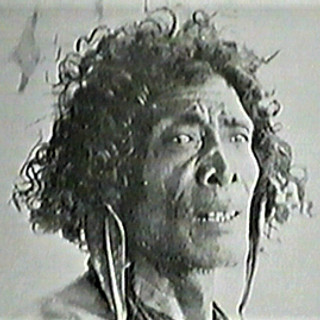
One of John Williams' photographs shows a Chinese indentured labourer being apprehended by troops. The image captures a tense, human moment amid the chaos, illustrating the direct impact of the conflict on those involved.

Other photographs show the armed presence used to enforce order. Troops were deployed on the topside, and heavy weapons such as a machine gun were positioned to ensure compliance and deter further violence.

Restored Order — Unresolved Tension
Order was eventually restored. Arrests were made, and the immediate violence ended. Yet the underlying tensions — segregation, inequality, and the uneasy relationship between indentured labourers and the Gilbertese constabulary — persisted. The warship could impose calm, but it could not repair the structural divisions embedded in the phosphate labour system.

Aftermath of the Riots: Arrests, Casualties, and Sentences
Newspapers across Australia and New Zealand covered the Ocean Island riots, highlighting the severity of the unrest and reporting on the outcome, including arrests, casualties, and sentences.
One report noted:
“Riots at Ocean Island. The war sloop Laburnum arrived at Fiji from Ocean Island with sixty Chinese prisoners on board, who were later sentenced to six months’ imprisonment on a charge of participating in riots at Ocean Island. It was stated that one Chinese and a Kanaka were killed during the rioting, and about ten Kanakas were wounded.”— Northern Star, Lismore, NSW, Wed 30 Dec 1925 (3)

A more detailed account appeared in the South Australian Chronicle (20 February 1926), providing further insight into the scale of the unrest:
“Riots at Ocean Island. Chinese and Islanders Clash. One man killed, seventeen injured. The warship Laburnum returned, having effectively remedied the situation at Ocean Island, where rioting between the Chinese and Gilbert Islanders necessitated an appeal for naval assistance. About 800 Gilbert Islanders and 200–300 Chinese were working in the phosphate quarries. The animosity between the groups was aggravated by idle workers and petty theft, culminating in a riot involving several hundred participants. Some Chinese had revolvers, while the islanders were armed with clubs. One man was killed, and seventeen were injured. A semblance of peace was restored by the resident commissioner, but the local police were inadequate to cope, and the European inhabitants watched anxiously. The Laburnum landed a party of fifty officers and men, seized weapons, and arrested twenty Chinese, ten of whom were convicted and sent to Fiji to serve prison terms. The authorities proposed repatriating the disgruntled islanders and replacing them with others.”— South Australian Chronicle, 20 February 1926
Memory and Record
The 1925 riots on Ocean Island remain a largely forgotten chapter of Pacific history. They reveal the complexities of multi-ethnic indentured labour systems, the pressures of extractive colonial economies, and the fragility of authority in remote imperial outposts. For a brief and tense period, Banaba’s topside became a theatre of empire.
Through Arthur Grimble’s writings and the photographs captured by John F. Williams, this remarkable chapter of Banaba’s history endures, visible and remembered for generations to come.
____________________________________
The Gilbert and Ellice Islands (GEIC as a colony) in the Pacific Ocean were part of the British Empire from 1892 to 1976. Today, the Gilbert Islands are known as the Republic of Kiribati, and the Ellice Islands as Tuvalu. https://en.wikipedia.org/wiki/Gilbert_and_Ellice_Islands
HMS Laburnum (1915). https://en.wikipedia.org/wiki/HMS_Laburnum
Riots on Ocean Island, Northern Star, Lismore NSW, Wed 30 Dec 1925 news article. Trove Archive: https://trove.nla.gov.au/newspaper/article/93541220
Riots at Ocean Island news article, The Chronicle (4) South Australian Sat 20 Feb 1926 Trove Archive: https://trove.nla.gov.au/newspaper/article/89638051?searchTerm=riots%20ocean%20island
5. Riots at Ocean Island news article, The Chronicle (4) South Australian Sat 20 Feb 1926 Trove Archive: https://trove.nla.gov.au/newspaper/article/89638051?searchTerm=riots%20ocean%20island
About the Author
Stacey King writes about the history of Ocean Island (Banaba), drawing on archival research, memoirs, and family records to preserve and share overlooked chapters of Pacific history. The photographs featured in this article were taken by her great-grandfather, John F. Williams, who lived on Banaba from 1901 to 1931. A keen photographer, he documented life on the island during the height of the phosphate era and captured scenes of Banaban daily life that might otherwise have been lost to time.
____________________________________
Get the Books!
To learn more about Banaba's history:
Te Rii ni Banaba: backbone of Banaba, Raobeia Ken Sigrah and Stacey M. King (2001: 2019)
A Pattern of Islands, Arthur Grimble
Return to the Islands, Arthur Grimble
Banaban Study Series:
Australia Banaba Relations: the price of shaping a nation, Stacey M. King
Essentially Being Banaban in a Changing World, Raobeia Ken Sigrah and Stacey M. King
Banaban Cultural Identity, Raobeia Ken Sigrah and Stacey M. King
____________________________________
For more information:
Come Meet the Banaban: https://www.banaban.com
Banaban Vision Publications: https://www.banabanvision.com

Comments