
Land Negotiations Between The Banabans and Mr Maynard, Rabi Island April 1947
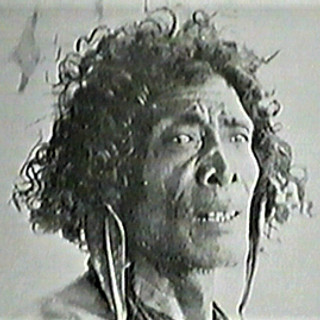

This transcript is taken from an original report documenting the April 1947 negotiations between the Banabans and Mr Maynard, drawn from Harry Maude’s Section 6 files.
It is a vital historical record that reveals the struggle, resilience, and political challenges faced by the Banaban people in the post‑war years. Conducted on Rabi Island in Fiji—where the Banabans had been forcibly relocated after the invasion and devastation of Banaba by Japanese forces during WWII—these negotiations took place in a foreign land, far from their ancestral lands and traditional landholdings on Banaba.
Despite exile and immense hardship, the Banabans continued to assert their customary rights as traditional landowners, fighting to protect the land, identity, and autonomy that had defined their people for generations. These exchanges illuminate a critical chapter in the Banabans’ ongoing effort to reclaim justice and uphold their rights despite displacement and loss.
THE NEGOTIATIONS BETWEEN THE BANABANS AND MR MAYNARD
IN APRIL 1947
1. It is as certain as anything can be that Messrs. Maude and Macdonald will be questioned regarding the above-mentioned negotiations. The following is an extract from the examination of Mr Rotan Tito in the first case:-
"Q. Before you signed the agreement, did you talk to anybody about the terms which had been offered to you?
A. As I remember, during this time, I was not happy, and I did raise and I even wrote certain arguments against.
Q. Against the proposals?
A. Yes.
Q. Who did you write to?
A. The first letter I wrote to the Government, to Ocean Island, to Barley and Macdonald, and Mr Maude, and on Rabi, I think perhaps I wrote to Captain Holland.
Q. Can I ask you this question again? Before you signed the 1947 agreement, did you talk to anybody apart from the other Banabans about the terms which you had been offered?
A. Yes, when Mr Macdonald and Mr Maude arrived, there were certain things 1 discussed with them. The things I mentioned to them were about the money.
Q. Apart from Mr Maude and Mr Macdonald, did you consult anybody else who was not connected with the Government?
A. Perhaps I remember also that there were Banabans there, and even Mr Maynard, Mr Holland and Mr Ellis were there when I raised those points.
Q. Did you have any outside help?
А. Help in what respect?
Q. Did you have any advice about the terms you had been offered?
A. None.
Mr Justice Megarry: There was nobody to advise you whether they were good terms or bad terms, is that right?
A. Nothing. It was from our own hearts, we Banabans. We did not agree.
Mr MacDonald: When you say you did not agree, you signed the agreement, but with reluctance, is that right?
A. Yes".
2. The suggestion has been made specifically elsewhere and is implicit in the above quotation, that the Plaintiffs' counsel will argue (and it would appear that the Judge is sympathetic to the argument) that the Вапабало received neither advice nor assistance in considering and reaching a decision as to whether or not to sign this agreement with the BPC; and that they certainly should have received such advice and assistance in that the Secretary of State for the Colonies was in the position of a trustee, with obligations to ensure that, in any such negotiations with such а large industrial/commercial corporation, it was his duty tо ensure that the Banaban community did receive such advice and assistance before signing such an agreement.
3. The word "trustee" has been used above, since that is the word which the plaintiffs' counsel used to the writer of this note when he visited Fiji before the first case commenced. I am not a lawyer, but the position seems to me to be possibly this: if the Secretary of State was the legally established and appointed trustee, then, as such, presumably he had certain legal obligations to the Banaban community. (The same Might possibly be said also to apply in similar circumstances to the High Commissioner and/or the Resident Commissioner). If, however, the
Secretary of State, in particular (but also possibly the others), was merely responsible for ensuring the proper general supervision, and the social, economic and political (as part of the Colony) progress of the Banaban community, then the question of the extent of his obligations in such a situation appears somewhat different, whatever ethical view may be taken of the matter. But this seems a matter for discussion by the lawyers and, failing their agreement, decision by the Judge.
4. The remainder of this note deals with the situation as it eventuated, whatever may be the view or decision on the point raised in the preceding paragraph.

5. From 1909 onwards, Resident Commissioners of the Gilbert & Ellice Islands Colony, until the year 1927, viz., Captain J. Quayle Dickson, Mr E.С. Eliot and Mr H.R. McClure were naturally concerned with the phosphate industry and in particular, with negotiations for the acquisition of mining land and the terms on which that land was acquired, and other ancillary matters. Mr (later Sir Arthur) Grimble was appointed Resident Commissioner of the Colony on the 2nd January, 1926, at which point in time the BPC were already pressing for the acquisition of further mining land. Mr Grimble, who had been a very close and sympathetic friend of the Banabans for the preceding 14 years, was naturally anxious that negotiations between the Banaban community and the BPC should be concluded amicably and equitably to both parties concerned.
6. In the lengthy, tough, arduous. and often vacillating negotiations - and somewhat voluminous correspondence - which took place over the years, it is clear that Mr Grimble himself became steadily and increasingly emotionally involved.
7. Thus, in March 1928, Mr Grimble was beginning to despair of such a conclusion being reached, for, in his telegram to the High Commissioner of the 5th March, he noted:-
"I have to report that the party responsible for this motion (opposing a motion regarding the sale of the new mining area) argued throughout the meetings in favour of temporisation on the grounds that I was about to go to England and that they might then be able to persuade the officer replacing me to obtain for themselves a better price than at present being offered".
8. By October 1928, Mr Grimble had plumbed the depths of despair of obtaining an amicable and equitable conclusion of the matter, for, in his confidential telegram of the 9th October to the High Commissioner, he noted:—
"Unfortunately, the general opinion of the Banabans now is that I am their enemy and have deliberately failed to represent their interests. Feeling is the more bitter because it replaces deep-seated friendship of 14 years".
9. In this connexion, it is wholly appropriate to cite an excerpt from the Secretary of State's telegram to the High Commissioner, No. 84 of the 6th October, 1930, (whilst negotiations were still under way), which stated:-
"Correct course is for Resident Commissioner to afford all reasonable facilities to enable British Phosphate Commission to make their offer to Banabans but not otherwise intervene unless his advice is sought, in which event he may personally advise them to accept the terms offered".
The text of that telegram was repeated to the Resident Commissioner so that he might guide himself accordingly. (In fact, he did advise the Banabans to accept the terms offered).
10. In his eyes, however, matters worsened to such an extent that he telegraphed to the High Commissioner in his telegram No. 52 of the 8th April, 1931, as follows:-
"Му conviction is that for the reason given in щу telegram of 9th October (see paragraph 8 above), my presence here is a definite hindrance to peaceful settlement. Banabans will only realise the fact if the case as already put to them be now re-stated by a new Resident Commissioner appointed from elsewhere".

11. Finally, in paragraphs 18 and 26 of his despatch No. 116 of the 21st May, 1931, to the High Commissioner, regarding the opposition of some Banaban landowners to the arbitration award, Mr Grimble wrote as follows:-
"They (the Banabans) seemed at first to promise that if Your Excellency's opinion should prove to be against them, they would offer no further opposition to the land transfer, but they refused to be explicit when invited to clarify the point"....
26. There still seems to be no doubt that many Banabans still entertain the hope of reversing all recent decisions made in respect of the new mining area. They are influenced in this by the eloquence of Rotan and others, whose argument is that the transfer of the land and the protection of the interests of the British Phosphate Commissioners are the unauthorised acts of the Resident Commissioner and, as such, subject to early cancellation by a higher authority".
12. There is no need to pursue this issue further. The plain fact is this: far from achieving à settlement on their own with the other party to the negotiations, and far from accepting his advice in the matter as Mr Grimble confidently thought and hoped, his advice in his capacity as Resident Commissioner and head of the Government has been utterly and decisively rejected.
13. Thus stood the verdict of history - or, rather, of the Banabans, at the opening of the year 1946.
14. Mr. Maynard of the BPC visited Rabi on the 19th - 22nd March, 1946, primarily on a goodwill visit but, as the minutes of his meetings with the Banabans make crystal clear, it was the Banabans who raised with him the question as to the position regarding the offer made by the BPC in 1940 regarding the desire of the latter to acquire further mining lands. No negotiations in any sense were undertaken during that visit, though the Banabans asked for prices of £225 per acre, and a royalty of 1/3d per ton of phosphate exported in future; they were told that their request would be conveyed to the General Manager of the Commission.
15. The fact that the Banabans themselves raised this issue may well have been in part due to Rotan's sublime self-confidence in his abilities to conclude negotiations to the maximum satisfaction of the Banaban community; in this connexion, see paragraphs 7-8 and 10-11 above. Further, on two occasions during discussions with the Banabans regarding their funds, lands, etc. on Ocean Island, the writer of this note distinctly recalls Rotan stating that, if only he had been able to explain the whole problem to the High Commissioner, a satisfactory outcome of the problem would have been assured. (Despite, however, the fact that Rotan did see the High Commissioner on no fewer than three occasions, as part of a Banaban meeting with Sir Murchison Fletcher in 1931, with Sir Arthur Richards in 1958, and Sir Harry Luke in 1941, it may be noted that Rotan's confident expectations were not achieved). Or, again, on the same theme, when discussing the question of whether or not the Banabans should return to Ocean Island (in the first case), Rotan was asked:-
"What were your own feelings about this? What did you think the Banabans should do?"
to which he replied:-
I myself did want to go to Fiji with my intention of having a chance to consult the Governor, but a number of us wanted to go to Banaba".
16. When, in January, 1947, the question arose as to the conduct of negotiations with the Banabans regarding the future policy of Government with regard to them, and the allied question of negotiations over the acquisition of further mining land by the BPC, the Secretary, WPHC, notified Major Holland that it was proposed that a suitable officer should proceed to Rabi to conduct negotiations with the Banabans on their future in collaboration with himself, Major Holland reacted very strongly on both issues as 15 shown by the following excerpt from his telegram of the 3rd February, 1947:-
"I suggest that Maynard, when he comes, should come alone. Banabans have agreed, and most reasonably in my opinion, that agreement with the BPC is a matter of independent settlement. If Maynard arrives with the officer you mention, two matters will again become intermingled to the prejudice of both".
17. Major Holland's telegram above-quoted was repeated to Mr Maude, then Resident Commissioner, who replied as follows:-
"I agree that Maynard should negotiate with Banabans independently об Government and at a different time. If this is not done, failure of one may lead to failure of both and in any event, odium attaching to Government negotiator if associated in the Banabans' mind with Commission's bargain would nullify any influence he might have previously possessed. I think Commission would agree that Government's previous attempt to assist in these negotiations left the Banabans with profound distrust of our motives".
18, That advice was accepted by the then High Commissioner (Sir Alexander Grantham), who replied as follows to the Resident Commissioner in his telegram No. 150 of the 26th February, 1947:-
"British Phosphate Commissioners are being asked to send Maynard here at the end of March to negotiate with Banabans on terms of acquisition of land in Ocean Island. Those negotiations should then be completed by 14th April, and Manard will be available if any questions about the land terms are raised by the Banabans with you and Macdonald".
19. Two additional factors should, however, also be recorded here:-
(a) it is clear from the fact that the Banabans first raised the matter of negotiations themselves that they were only too anxious to reach agreement in the matter - see paragraph 14 above - and it was therefore surely entirely reasonable to conclude that the matter should be conducted on an apparently "willing seller/willing buyer" basis;
and
(b) since Major Holland is now deceased, and there are no records in this respect, it is not possible to state with any degree of certitude whether or not the Banabans consulted him at any stage, either before or during the negotiations. However, Major Holland was present in Rabi in his capacity as Banaban adviser and welfare officer and had, during the 8 months of his service there, won the admiration and respect - and probably trust - of the Banabans, bringing them forward from being a dispirited, somewhat unhappy, and unsettled community to one of hope, relative happiness and relative prosperity. I think it would have been extraordinary if the Banaban leaders had not consulted him, and, indeed, the quotation in paragraph 16 indicates that there must have been some degree of consultation. But, whether they did or not, the fact remains that his services there were freely available to the Banabans in his two capacities above-mentioned.
20. In view, therefore, of what is recorded in paragraphs 12-18 above, it 18 small wonder indeed that the Secretary, WPHC, wrote to Holland in his letter No, F. 48/30 of the 25th March, 1947:-
"You should, of course, take no part whatever in Maynard's land negotiations with the Banabans, making it clear to the, if necessary, that those negotiations are wholly between them and the British Phosphate Commissioners".
It is not, however, known, in the absence of relevant records, whether in fact the Banabans discussed these matters with Major Holland, or not, and, if so, with what results.
21. Two final points remain to be dealt with in this note. The first concerns certain parts of Rotan's evidence in the first Court case, as is shown by the following question and answer:-
"Q. You would like to say something about the agreement. Please do so. If you wish to say something more, please do.
A. Respecting the taking of our land, there was not any heartfelt agreement. There has been this - it is almost being forced upon us - the active persuasion on the part of the company and the Governor for us to part with our land. This happened over the 150 acres and also over the further acquisition of land or request for further land. They came forward with a price and
actively persuaded us to accept".
(The words "actively persuaded" were later changed, after discussion, to the word "coerced").
22. However, insofar as Government was concerned, the evidence in preceding paragraphs clearly shows that Government "leaned over backwards" so as not to influence the negotiations in any way, and the accusation of Rotan insofar as Government is concerned is totally at variance with the truth.
23. Insofar as the BPC is concerned, it is impossible to envisage how the company could in fact have "coerced" the Banabans, with what weapons one may well ask. I fear that this allegation, too, bears little relation to the truth.
24. In conclusion, it may well be asked whether or not the Banabans sought to obtain legal or other advice or aid before entering upon the negotiations with the BPC. То my knowledge, no such request was ever made, and the evidence in the preceding paragraphs tends to support this. Nor, if such a request had been made, is it conceivable that it would have been refused, In support of that view, it may be noted that when the then Chief Secretary of the WPHC visited Rabi in 1949, he was told by the Banabans that they desired to employ the services of a lawyer; to that, he replied that there was no objection to the Banabans employing a lawyer if there was any matter which needed his attention. Further, during the year 1957 and subsequently, it is within the knowledge of the writer of this note that the Banabans did in fact employ at least three local lawyers - the Hon. A.D. Patel (leader of the Opposition in the Legislative Council), the Hon. A.I.N. Deoki (a member of the Opposition in the Legislative Council), and Mr M.J.C. Saunders, formerly a Senior Magistrate, who later retired and engaged in private practice. No permission was, as far as I know, sought by the Rabi Island Council to employ such lawyers, nor, if it had been, would it have been refused.
Get the Books!
To learn more about Banaban history and their struggle to seek justice:
Te Rii ni Banaba: backbone of Banaba, Raobeia Ken Sigrah and Stacey M. King (2001: 2019)
Banaban Study Series:
Legacy of a Miner's Daughter: the impact of the Banabans after phosphate mining, Stacey M. King
Australia Banaba Relations: the price of shaping a nation, Stacey M. King
Banaban Cultural Identity, Raobeia Ken Sigrah and Stacey M. King
____________________________________
For more information:
Come Meet the Banaban: https://www.banaban.com/
Banaban Vision Publications: https://www.banabanvision.com

Comments